
For many gamers, buying a prebuilt gaming PC is the easiest and best way to enter the world of high-performance gaming. It’s totally fine to go with the ready-to-play setup, but building your own gaming PC is a whole other kind of satisfaction.
A self-made PC grants you the freedom to express yourself through gaming. Do you need raw power to deliver triple-A titles at 4K? Looking for a powerful esports machine to dominate the competition at lightning speed while delivering a super-smooth gameplay experience?
Or maybe you seek a hybrid rig that can play games, stream and create content in one. Whatever you’re aiming for, a custom system allows you to take control of everything.
Why It Is Worthwhile to Build Your Own PC
Assembling your own computer enhances autonomy, mastery, and returns on investment. Individual components can be upgraded, more powerful components can be incorporated as gaming needs increase, and the restrictions of pre-built systems can be avoided.
A Reflection of Your Gaming Spirit
A custom computer will be the digital hub of your gaming, artistic activities, and achievements. The satisfaction you will feel when the computer powers on after you complete the assembly and installation of the components will be priceless and far surpass that of a pre-built system.
How This Guide Can Help
This article covers a wide range of tools and components, including computer cases and a step-by-step guide to computer assembly. The initial boot, the first time you set the BIOS, the operating system installation, and performance adjustments. Everything will be explained in a way a complete novice can understand, in case he wants to go with a custom PC rather than investing in pre-built options. So, without further ado, let’s get started!
Choosing the Right Components for Your Gaming PC Build
Building a gaming computer requires careful planning and consideration of which components to use and how they will work together. There are CPUs and GPUs to consider, and you need to weigh how purchasing each component will affect the computer’s speed, stability, and overall efficiency.
Some components can be interrelated in ways that create what gamers call a ‘bottleneck,’ where one component is significantly weaker than the rest. Above all, you can purchase these parts individually or in bulk from Zestro Gaming.
The following outlines the steps to complete this process.
PC Case: Space, Airflow, and Future Upgrades
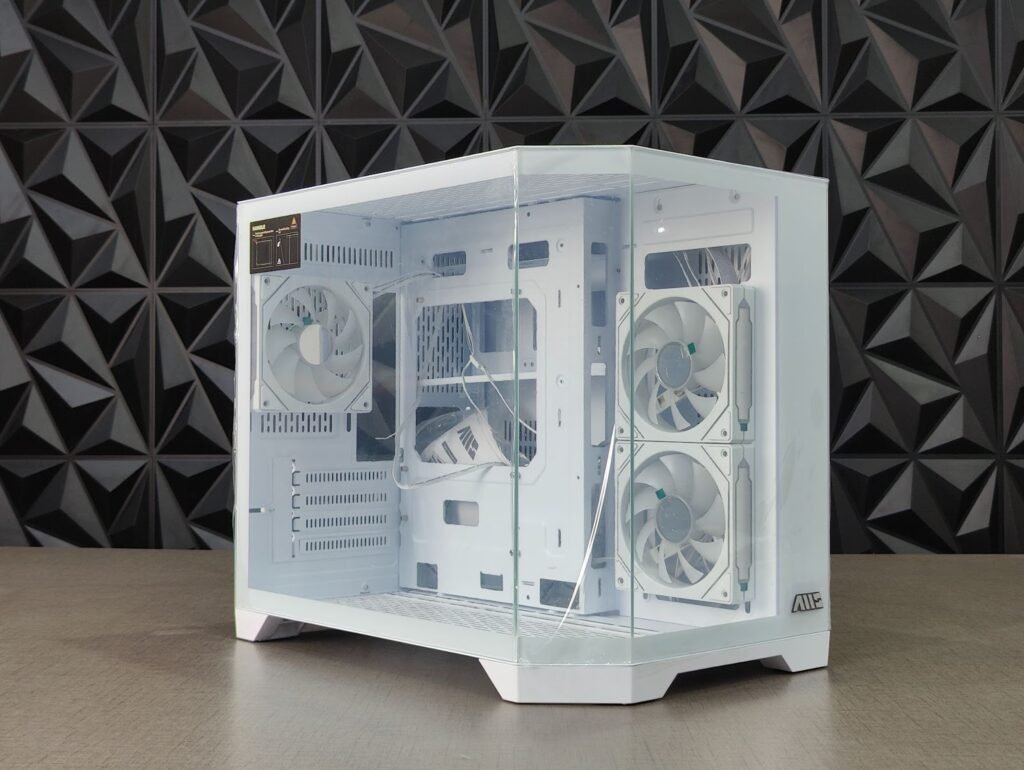
The PC case is a vital component as it houses and protects all other components. Without an appropriate space, one cannot install the other components. Every part will have a different size, and some high-performing graphics cards are very long and tall.
The more efficient the case airflow is, the cooler the components stay, which can improve overall performance. The case will also have a big impact on the ease of use and the overall cleanliness of the cable management. Lastly, you should consider the case’s sustainable use. An optimum case will allow future upgrades to be installed.
Different Case Sizes
Full Tower
- Best ventilation, most space.
- Supports large motherboards (E-ATX) and big GPUs.
- Ideal for custom water cooling or heavy future upgrades.
Mid Tower (Most Popular)
- Fits ATX, Micro-ATX motherboards.
- Plenty of airflow and expansion options.
- Great balance for most gamers.
Micro-ATX Case
- Compact, affordable, fewer expansion slots.
- Still powerful if the airflow is good.
Mini-ITX Case
- Very small, portable, stylish.
- Harder to build in, limited cooling and expansion.
Ensure you use a proper case, as it improves airflow, keeps temperatures low, reduces noise, supports large GPUs, and makes cable management much easier.
Processor (CPU): Your System’s Brain
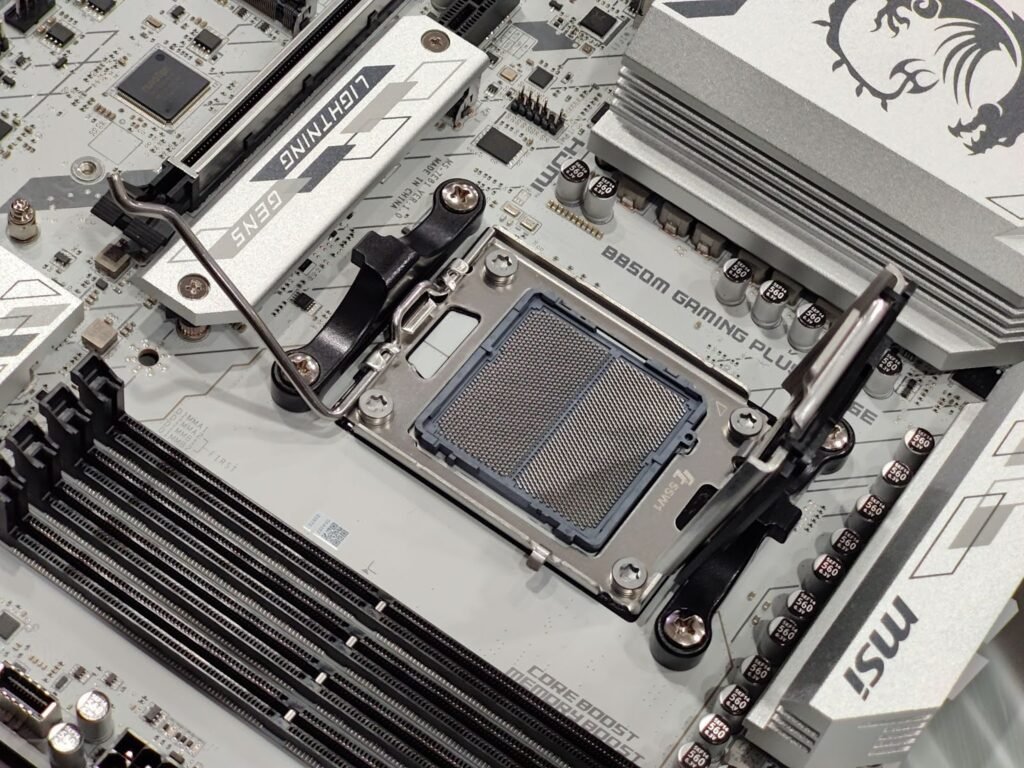
The CPU, or processor, is a critical component of a computer. It oversees all background processes and ensures everything functions. The computer’s intended use will also be influenced by the CPU. Adding more cores to the CPU improves performance and efficiency. Modern, more complicated games and programs will require a CPU with more cores, especially when running multiple tasks simultaneously.
The CPU socket must be compatible with multiple CPUs in case you want to upgrade in the future. The CPU should be balanced with the rest of the components so the graphics card can perform at its best.
Intel vs. AMD and What to Choose
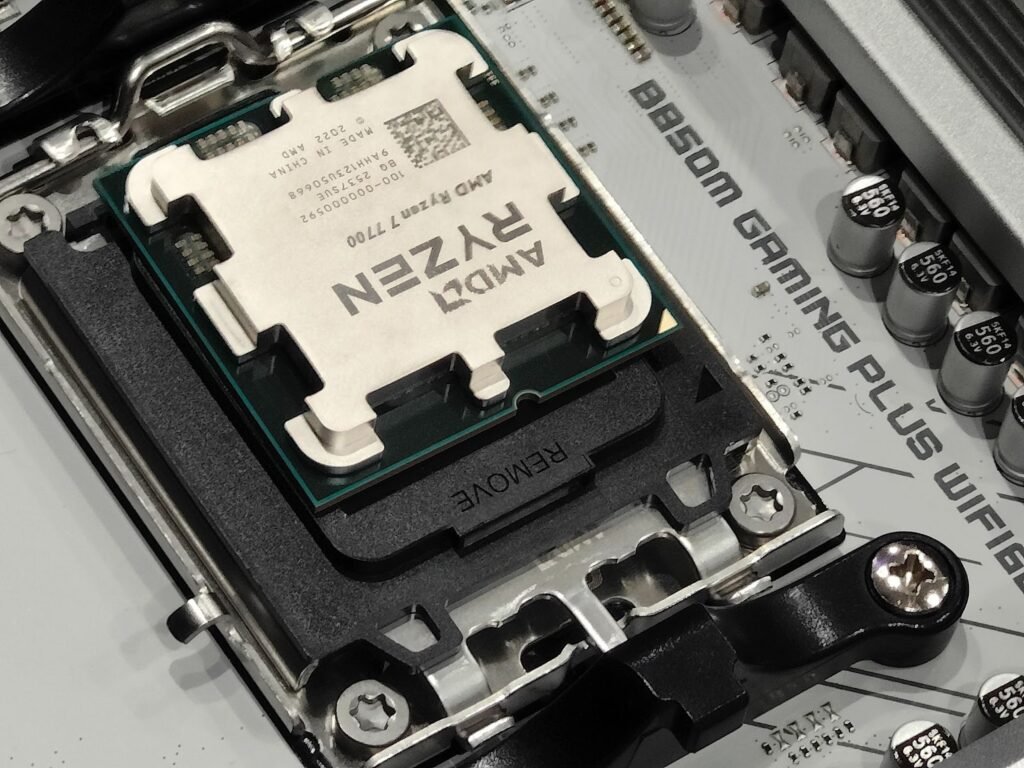
The CPU determines system responsiveness, multitasking capabilities, and performance in certain games or creative workloads.
Intel CPUs
- Intel processors are best for high FPS gaming, especially in esports titles.
- Strong single-core performance.
- Integrated graphics on most models.
- Excellent power efficiency on newer generations.
- Great option if you want plug-and-play performance.
AMD Ryzen CPUs
- AMD Ryzen processors are best for multitasking, streaming, and content creation.
- Higher core counts at similar price points.
- Very strong in productivity workloads.
- Modern Ryzen CPUs provide excellent gaming performance.
- Often better long-term upgrade paths due to socket stability.
CPU Cooler: Keeping Temperatures Under Control
The CPU cooler enables the processor to operate at its highest safe speed. AIO liquid coolers offer lower temps and quieter performance, but require planning around case spacing. Thermal throttling is prevented, and FPS remains consistent as cooling improves overall performance and extends the CPU’s lifespan. Choose a cooler that fits the case and meets your CPU’s power requirements.
Motherboard: Compatibility and Features
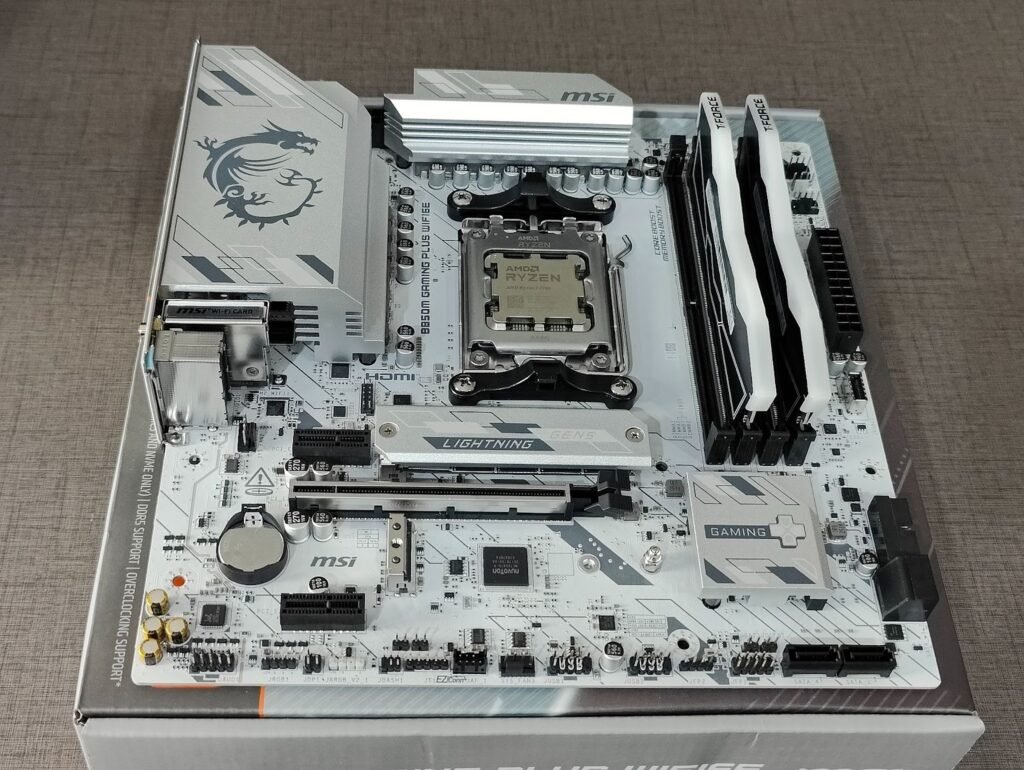
Determining which parts can be installed is the motherboard’s most important function. Choose a motherboard with the correct socket for your CPU and a high-quality VRM to deliver stable power, in ATX, mATX, or ITX form factor to fit your case. There should be sufficient fan headers, USB ports, and RAM support. A motherboard can’t increase FPS, but a high-quality motherboard makes builds smoother and more stable and makes upgrades easier down the road.
RAM: Smooth Gameplay, and better Multitasking
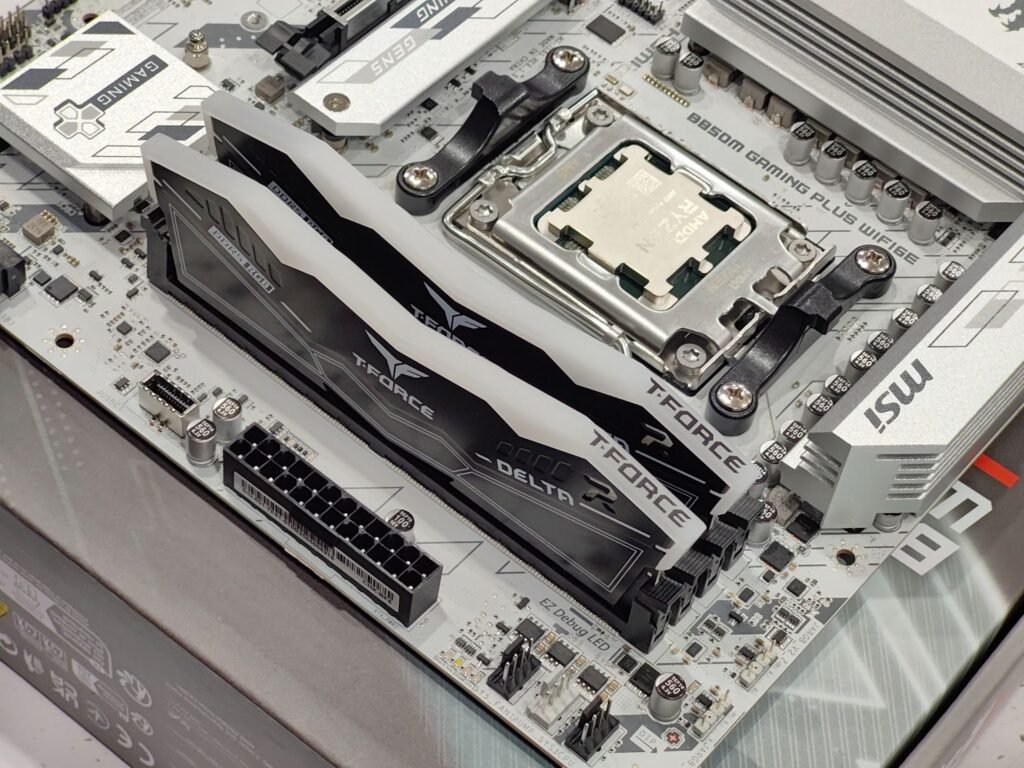
Improved loading times, stutter reduction, smoother multitasking, and overall improved RAM performance.
In gaming today, 16 GB is the absolute minimum. 32 GB will deliver improved performance on more recent AAA titles and even some games planned for future release. Higher MHz speeds are beneficial for both AMD and Intel processors. For better bandwidth, always go dual-channel (two sticks). If you anticipate heavy multitasking, buy more RAM than you expect to need for a task; it is better to have headroom for future upgrades.
Storage: Faster Loads and a Snappy System

Your drive controls how quickly games boot and how fast your system feels.
NVMe SSDs are the fastest and best for both your operating system and your favorite games, while SATA SSDs are cheaper and suitable for most titles. Hard drives, while slow, provide ample storage for large game libraries.
A good balance is one fast NVMe drive for your boot drive and a second storage drive with either an SSD or a SATA HDD. Ultimately, the faster your storage, the less waiting you will do and the more playing you will get to do!
Types of Storage and What They’re Best For
Storage affects boot speed, game loading times, responsiveness, and overall smoothness.
- NVMe SSD (M.2)
- Fastest consumer storage available.
- Reads/writes drastically faster than SATA.
- Perfect for OS, frequent gaming, and creative work.
- SATA SSD
- Still very fast and reliable.
- Cheaper than NVMe.
- Ideal for game libraries, applications, and general use.
- HDD (Hard Disk Drive)
- Much slower, mechanical.
- Best for mass storage (videos, backups, large files).
- Not recommended for games or the OS if speed is critical.
GPU: The Heart of Gaming Performance
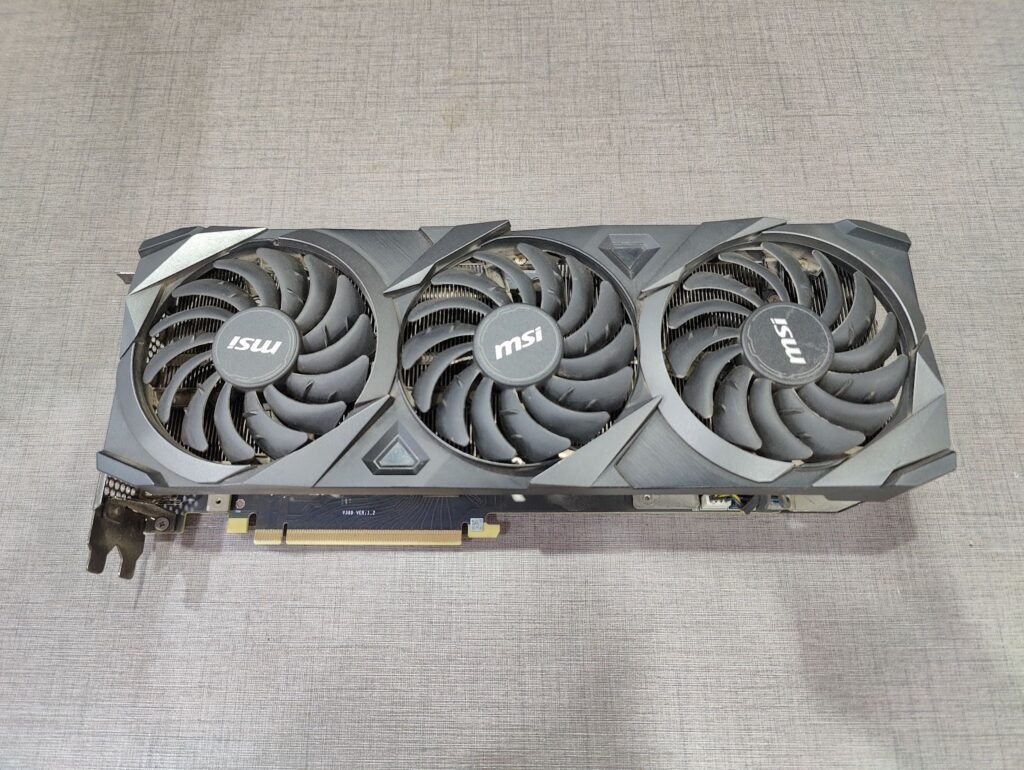
Your graphics card will always have a bigger impact on your frames per second (FPS) performance than the rest of your computer.
To determine the preferred GPU, base it on the resolution. For 1080p, less power is required; 1440p requires mid- to high power; and 4K requires top-end performance. Check the required VRAM for the games you plan to play.
Triple-fan cards are preferable as they are more cooling efficient and operate more quietly. Other features, such as ray tracing and upscaling, can be considered to improve overall game performance and graphics. Whether you are using an Nvidia GPU or another GPU, ensure it is matched to the CPU to prevent bottlenecking.
A quality Power Supply Unit protects your system components and ensures overall reliability. Always select a PSU with sufficient power for your CPU and GPU, and leave enough room for future upgrades.
Preparing Your Tools and Workspace
The first priority is not to open any boxes or start tearing into components. Let’s set up a workspace that enables organized, safe, and efficient building. A powerful gaming PC contains delicate electronics, tiny screws, and several steps that require some elbow room. It’s just that the right preparation isn’t optional; it is the build and a good way to avoid mistakes.
Choose an Appropriate Work Area
Choose a sturdy, level surface with enough space to accommodate the PC case, the motherboard’s component boxes and other packaging. A solid table, whether as a dining table, workbench, or large desk, works well. Avoid placing the structure on carpet (not recommended anyway due to the risk of increased static charge). If all you have is a carpeted room, try to find a piece of cardboard or board that is larger than the area under your feet while knitting.
A comfortable workspace should include:
- Sufficient light to see screw holes, plugs, and labelling on the motherboard.
- A dust-free, clean surface to prevent dirt from becoming mixed onto the parts
- Convenient spots for testing components later on ,near electrical outlets
- Ample space to spread out the type without stacking it.
- Remove drinks, food, or anything that might spill. Liquids and electronics don’t get along.
Properly Manage Electrostatic Discharge (ESD)
It’s rare, but a single static shock can destroy an entire CPU, motherboard, or RAM stick instantly and silently. Fortunately, ESD is easy to avoid with a little forethought:
- Whatever you do, don’t keep your feet moving and working.
- Touch the metal part of the case to ground yourself
- Work on non static surface like wood or metal tables
To keep your parts in perfect condition, leave them in their antistatic bags until you’re ready to use them.
Optional tools, including an antistatic wrist strap that costs just a few rupees, can provide a small measure of peace of mind, and you can’t beat the price.
Gather the Essential Tools
You need only a handful of tools to build a new PC, but the right ones make the task easier and more efficient.
Phillips Screwdrivers
You will use a Phillips #2 screwdriver for most component installations. For certain M.2 SSDs, a Phillips #0 screwdriver may be required to access some of the smaller screws. Magnetic-tipped drivers are very helpful because they hold screws in place, reducing the risk of a screw falling into the case while working.
USB flash drive (8 GB or larger)
This will be useful later for storing your operating system installer. If you have the USB drive ready in advance, you can proceed directly from assembly to OS installation without waiting.
Small Container for Screws
Each part includes its own screw pack, and losing a single screw can significantly impact the build. A cup, tray, or magnetic parts dish helps you keep track of everything.
Optional Tools
- Cable ties for neater cable routing
- Wire cutters or snips: A flush cutter or scissors will be required to trim excess cable tie material.
- A flashlight or headlamp to work inside the tight case cavities
- Decent Gaming Headphones to have more fun while playing
Organize Components Before You Begin
Unpack all boxes and verify that you have received all ordered goods. This also prevents surprises in the middle of the build. Then, do not separate smaller components such as RAM, SSDs, and mounting hardware to prevent confusion.
If you have any hardware included, such as screws, drive sleds, or removable brackets, have it ready. Most come with a small bag of mixed screws, sometimes sorted by type, but not always. Pre-sorting them means you’re ready when it’s time to mount the motherboard and PSU.
Final Workspace Checklist
So, before we proceed let us confirm:
- You have your Phillips screwdrivers handy.
- The USB installer is prepared, or you want to create it in the near future
- The work area is spacious, well-lit, and ESD safe.
- All component boxes are filled, but tidy
- It can be fully opened while cased or free-standing.
Now that you have everything set up, it’s time to get your hands dirty with the more practical parts of the build.
Step-by-Step Assembly: Bringing Your PC to Life
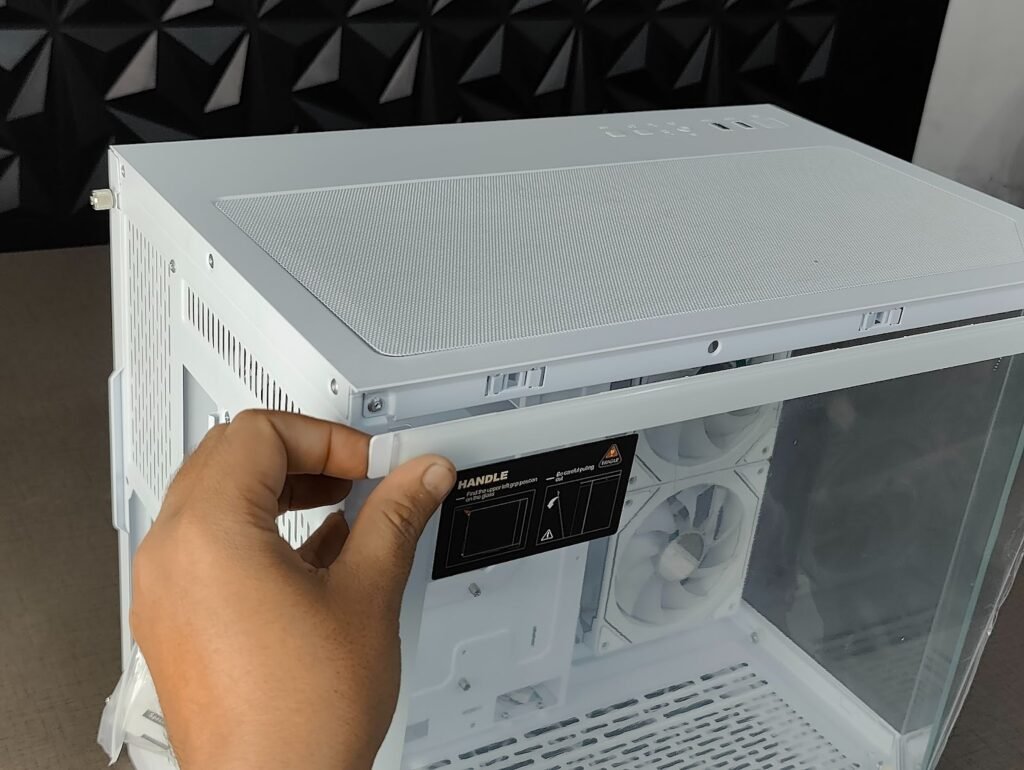
After you have all your parts ready and your workspace prepped, the fun starts: putting together your gaming PC. This phase turns a table full of parts into a beast ready to tackle your favorite games. Whether this is your first time building or you’re back after a long absence, the following steps should guide you through every crucial installation with clarity and confidence.
Step 1: Set Up and Inspect Your Motherboard

Before you begin, remove your motherboard from its antistatic packaging and place it on a clean, flat, dry, non-conductive surface. The motherboard is the central platform on which everything else is attached, so don’t be in a hurry here.
Checklist before installing components:
- Make sure the CPU socket cover is in place
- Find the RAM slots (these are almost always situated next to the CPU socket)
- Pick out the M.2 slots for SSDs
- Get to know the 24-pin and 8-pin power plugs
- Getting oriented now will help keep the rest of the assembly running smoothly.
Step 2: Install the RAM: The Easy Part That Is Also Critical

No other component of a build is simpler than adding RAM, but its functionality depends on proper alignment. An accurate configuration is needed to improve memory performance, enhance multitasking, and ensure a more stable system.
Finding the Correct RAM Slots
Prior to installation, consult the motherboard manual. RAM slots typically follow a color-coded scheme. Depending on how many sticks and slots you’re working with, you should follow the indicated configuration:
Motherboard with 2 RAM Slots:
Take each stick, and place one in slot 2 and the other in slot 1. (Both slots will usually be marked. If you want to use dual-channel support, you should populate both slots.
Motherboard with 4 RAM Slots:
In dual-channel mode, you need to skip a slot.
2 sticks: Slots 2 and 4 are usually intended for sticks (2 is the second slot, and 4 is the fourth, with the CPU in front of you).
4 sticks: For optimal performance, use all 4 slots. This will allow for maximized RAM and bandwidth.
The proper configuration enables dual-channel operation, which improves overall multitasking and gaming performance by doubling memory bandwidth.
Open the RAM Slot Clips
Push down on the retention clips or locking tabs at the ends of the DIMM slots.
In their finished configuration, these clips will ensure the RAM is securely seated in its installed position.
Insert the RAM Stick
There will be a notch on the stick that must be aligned with a ridge in each slot. The RAM has a directional component, so it should only be possible to insert the RAM one way.
Press down firmly and evenly on both ends of the stick until you hear an audible click.
You will hear the clips automatically reverting and securing the RAM.
Repeat for Additional Sticks
If more sticks are available, repeat the process using the recommended slot configuration for each.
All sticks must be seated evenly. Otherwise, the system may fail to boot properly or run in single-channel mode.
Step 3: Put in the CPU: Precision Over Force

Intel CPUs: Installation Guidance
Opening the Socket:
Identify the CPU socket on the motherboard. A small metal lever should be visible on the side.
Gently push down on this lever and slide it to the side to lift the socket cover.
Handle the CPU with Care:
Always hold the CPU by the edges and do not touch the bottom pads and the top with your fingers. Oils, dust, and dirt will affect contact and performance.
Align the CPU:
Look for the small golden triangle on one CPU corner.
Align it with the triangle or arrow on the motherboard socket.
Position the CPU:
Gently drop the CPU into the socket. It should not require forced insertion. If it does, remove and realign.
Securing the CPU:
Push the retention arm down into position. There should be some resistance; however, the CPU should not shift underneath.
Note: Intel CPUs use LGA sockets; this means the pins are on the motherboard, not on the CPU. Do not touch or lift the socket pins; they are fragile.
The AMD Ryzen CPUs: Installation Guidance
Opening the Socket:
Locate the socket lever on your motherboard, then pull it down to lift the CPU tray.
Handle the CPU Carefully:
When handling the CPU, hold it by its edges. Try to avoid touching the bottom pins, as they can be delicate and prone to bending.
Align the CPU:
Search for a golden triangle on one of the CPU corners.
Match this to the socket’s triangle. AMD CPUs use PGA sockets, meaning that the pins are on the CPU.
Place the CPU:
Gently lower the CPU into the socket; it should drop into position. If it does not, do not force it.
Secure the CPU:
You should move the retention arm back down to lock the CPU in place. Ensure the CPU is seated flat in the socket.
Tip: AMD Ryzen processors have more pins than Intel processors, so keep this pin count in mind. If a pin is bent, it could prevent the system from POSTing and may damage the CPU.
Step 4: Add M.2 SSD Storage (Optional but Highly Recommended)

NVMe M.2 SSDs are blazingly fast and should be installed before the motherboard is installed in the case.
Locate the M.2 Slot
Every Motherboard has at least one; they are usually near the PCIe slots or the chipset heatsink. A few have small couplers with removable tiny heatsinks; remove them.
Insert the SSD
Unscrew the tiny mounting screw.
Insert the SSD into the slot at a low angle (approximately 30°–35°). That’s it. When it’s seated correctly, you’ll feel a gentle click.
Secure the SSD
Push the drive in until it is flush, then put the screw back in the screw.
Use the heat sink on your motherboard to dissipate the processor’s heat.
That’s all there is to it; your high-speed storage is installed.
Step 5: Install Your CPU Cooler, Air or Liquid
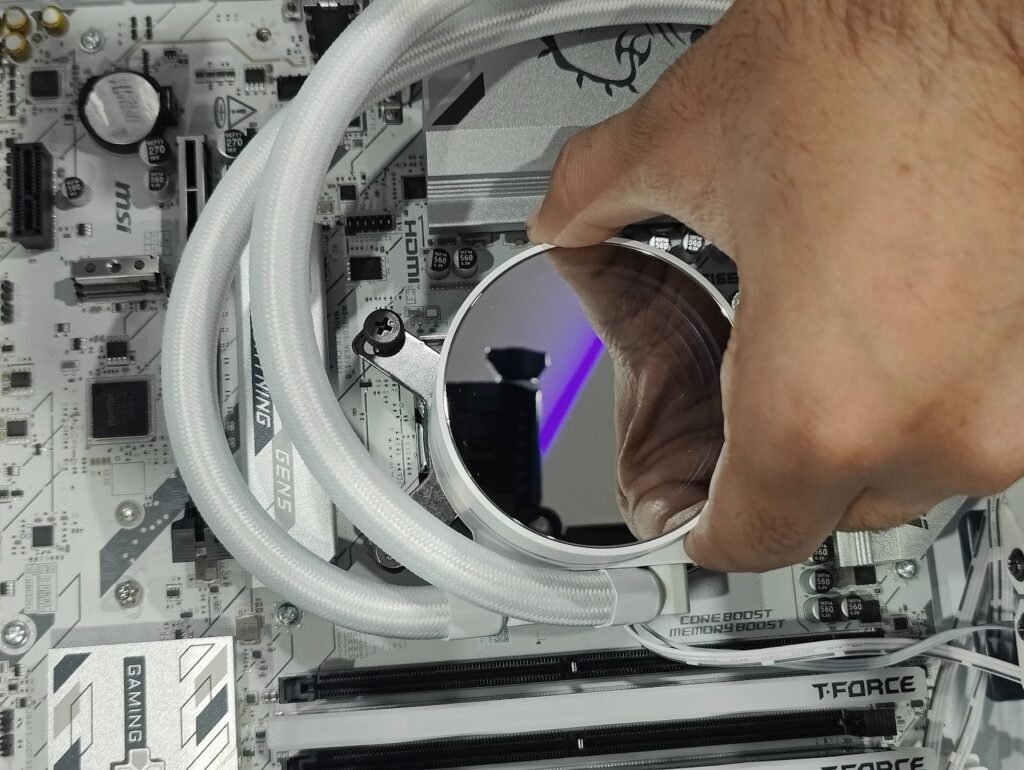
Performance and longevity are high when it’s well-cooled. Specific directions vary by cooler type, but common steps are outlined below.
Confirm Backplate Requirements
Some coolers rely on the motherboard’s integrated backplate. Others want to change it or modify it. As the motherboard is still out of the case, it would be ideal to install your backplates or switch them over now.
Apply Thermal Paste (If Needed)
Many coolers come with pre-applied paste. If not:
- Place a pea-sized dot in the middle of the CPU
- Do not spread it manually
- The cooler pressure will spread it evenly
Mount the Cooler
Position the cooler and align it with the mounting brackets on the CPU.
To prevent uneven pressure, tighten the screws in an X pattern (upper left > lower right > upper right > lower left) slightly at a time.
Connect the Cooler to Power
Air coolers: Connect the fan cable to the CPU fan connector on the motherboard.
Liquid cooling pumps: Connect the pump to the AIO PUMP or Water PUMP FAN1 header.
Your CPU Cooler is now mounted.
Step 6: Put the Power Supply in Place in Your Case
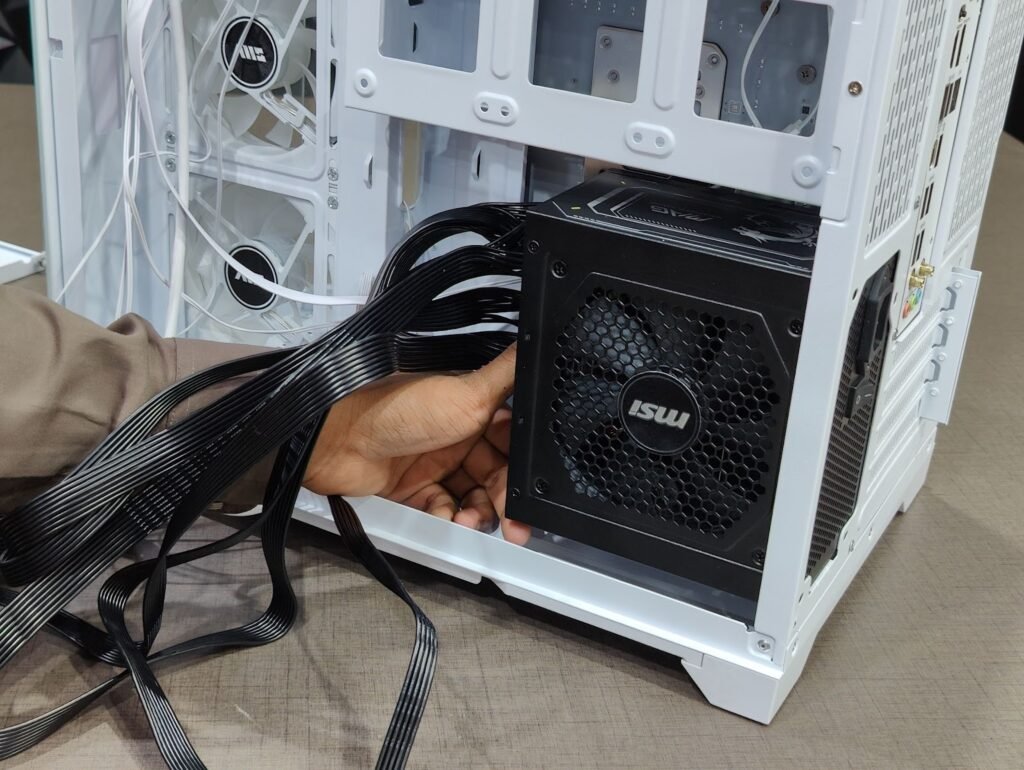
Your PC’s PSU (power supply unit) has one job: to power your hardware. A good install can help with power delivery stability and cable management (which can in turn affect performance and airflow).
Position the PSU
Today’s computer cases have the PSU mounted at the bottom.
If the chassis has a bottom vent, install the PSU fan side down to draw in cool air.
If there’s no vent, orient the PSU fan upward to help circulate air inside the case.
Once you’ve got the PSU in place, slip it into its position and align the screw holes with the case’s mounting locations.
Secure the PSU
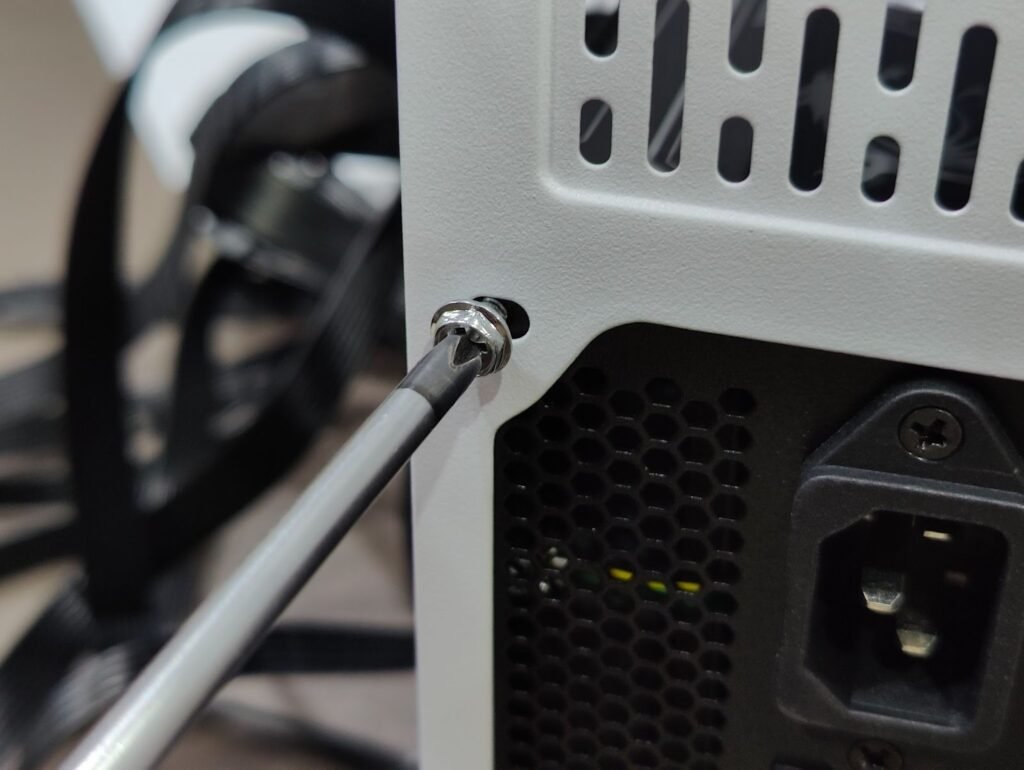
Secure it with screws from the PSU to the case.
Ensure it makes good contact and sits flat without wobbling, and you won’t hear any resonant noise from the PSU.
Know Your PSUs and Cable Management
For the record, PSUs vary in terms of how they’re wired:
Non-Modular PSU
- All cables are permanently attached.
- You need to route and conceal all cables (including unused ones), which can complicate cable management.
- Map out your cable routing to avoid obstructing airflow.
Semi-Modular PSU
- Crucial cables are hardwired (e.g., 24-pin motherboard and 8-pin CPU).
- Additional cables (PCIe, SATA, Molex) are available and can be connected on demand.
- Enables more efficient airflow and easier cable management than non-modular designs.
Fully Modular PSU
- All cables are detachable.
- You only need to insert the cables you need to clean the interior and optimise airflow.
- Great for clean builds and easy upgrades.
- Route the Cables Properly
Regardless of PSU type:
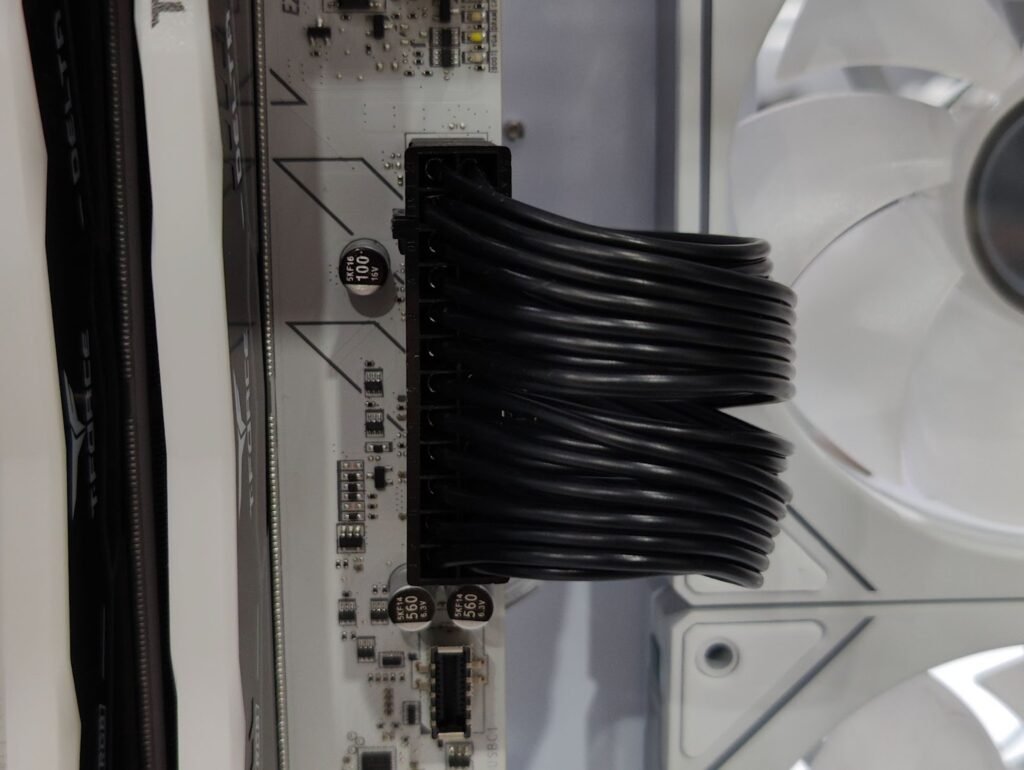
24-pin motherboard cable: Attach it to the main power port on the motherboard.
8-pin CPU cable: Connect to the CPU power socket near the top of the motherboard.
PCIe GPU cables: Use only if your GPU requires additional power.
SATA/Molex: For storage and fans, if needed.
Step 7: Place the Motherboard in the Case
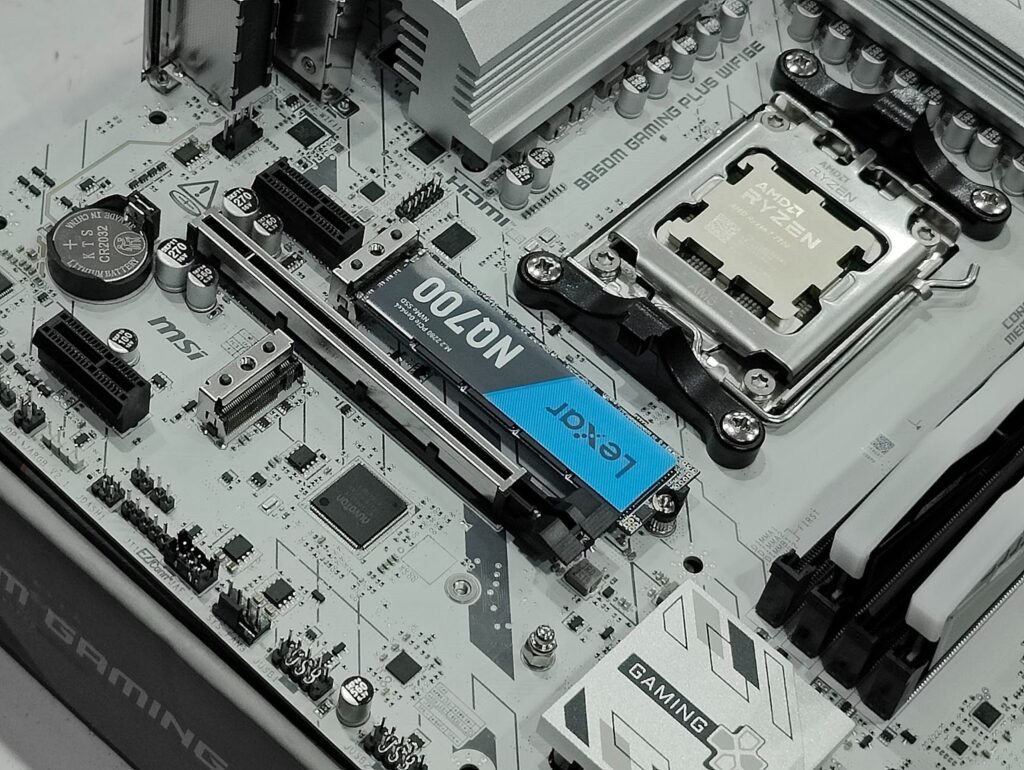
The motherboard is a critical step because it integrates everything. You may also want to check alignment as you go, and never force anything.
Install the I/O Shield
If your motherboard lacks a built-in I/O shield, snap the metal shield into either the top or bottom insert on the case.
Press down firmly around the edges; it can be a bit sharp, so keep an eye on your fingers.
Verify that all the ports align exactly.
Start with the Standoffs
Standoffs: Brass or metal spacers located inside the case, into which the motherboard screws. They are used to prevent the board from coming into contact with the metal chassis and causing a short.
If your motherboard layout doesn’t line up with the standoffs:
Remove any unnecessary standoffs that don’t have a hole in your motherboard. Additional standoffs can cause short circuits.
Install the missing standoffs at the mounting holes on the motherboard. Use the standoff tool ( which motherboard manufacturers often include with your case) or pliers.
Ensure every hole has a standoff, and that there is no standoff under an open area.
This step is critical. If the standoff position is incorrect, it can cause severe damage to the motherboard.
Align and Place the Motherboard
Gently lower the motherboard into the case.
While being careful not to damage the rear ports through the I/O shield cutouts, maneuver it into place so it slides in at an angle.
When aligned, place the motherboard over the stand-offs.
Secure the Motherboard
Begin with the center screw to secure the board in place.
Add the remaining screws in a star pattern.
Don’t over-tighten; snug and firm should be sufficient.
Connect Main Power Cables
Plug the 24-pin motherboard power cable into the right side of the board.
Plug in the 8-pin (or 4+4-pin) CPU power cable into the top-left socket on the motherboard.
Step 8: Install the GPU
For gaming performance, the GPU is king. Install it properly for the most stable performance, best cooling, and the highest quality power delivery and safety.
Prepare the PCIe Slot
It is usually the 2 rear-slot covers on most modern GPUs that need to be removed from the case.
Ensure that nothing is plugged into the top PCIe x16 slot on the motherboard, the slot with the most bandwidth.
Insert the GPU
Align the GPU with the PCIe x16 slot.
Solid motion, and even a click sound in the slot cliff.
The gold contacts should be fully concealed within the cut.
Secure the GPU
Secure the GPU bracket to the case using the case screws.
This prevents sagging while the GPU is installed and helps ensure a stable seat when your PC is moved for work or gaming.
Newer GPUs use different power connectors based on your wattage and architecture. Use the adapter/cable exactly for your GPU; do not mix adapters, except in unavoidable cases.
Common GPU Power Connector Types:
(1–2) 8-pin PCIe connectors: Used by most mid-range to previous-generation high-end GPUs.
6+2-pin PCIe: Provides 6-pin and 8-pin power for regulatory flexibility.
NVIDIA 12-pin Founders Edition connector: used on advanced, high-performance gaming cards.
12VHPWR/ 12V-2×6 connector: The new PSU standard for RTX 40-series GPUs and beyond.
How to connect safely:
Make sure to plug the connector in completely until it clicks; partially inserted cables can overheat.
In 12VHPWR, ensure the cable is not folded sharply within 3-4 cm of the connector.
Use the PSU’s cables directly, not splitters, unless your GPU maker provides and recommends them.
Step 9: Install Additional Storage
If you’re going with 2.5” SSDs or 3.5” HDDs:
- Locate the drive bays
- Shove the drive in a tray or bracket
- Screw it securely
- Attach SATA Data to the Motherboard, and SATA Power from the PSU
Step 10: Final cable management and case fans
Organize Your Cables:
- Everything else Screw in extra Velcro straps, zip ties or cable clips to tidy all PSU, GPU, storage and peripheral cables.
- Pass cables through the apertures in your case to ensure they are out of the airflow path.
- Better cable management also improves cooling, reduces clutter, and enables future upgrades.
Connect Case Fans:
- Connect each case fan to your motherboard’s fan headers or a fan hub.
- Make sure to have proper airflow: fans pointing from the bottom/front in and those from the top/back out.
- Do not leave fan wires near blades or airflow passages.
Connect Front Panel Ports:
Connect the power switch, reset switch, HDD/LED indicators, USB plugs, and audio plugs to the front motherboard headers.
Ensure that you follow the motherboard manual for pin arrangement and alignment very carefully.
Test all plugs to confirm that the buttons, LEDs, USB ports, and sound ports work.
Final Inspection:
Ensure there are no loose or pinched cables and that no cables obstruct fan access.
Disconnect all power and data while the front panel is off.
First Boot, BIOS Setup, and Operating System Installation
There are few things in a custom PC build more satisfying than powering on your machine for the first time. Finally seeing your parts spring to life, RGB lights springing into existence, and fans beginning to whirl is the reward for all those hours you’ve spent planning, building, and triple-checking before flipping that power switch.
But before you start installing games, there are some important steps to prepare your system for actual use: booting up for the first time, entering the BIOS, ensuring all components are recognized, and installing an operating system.
The First Boot of Your Brand New Gaming Giant
All the gear is in, and everything is connected; the build is finalised, so let’s get our first power on. The process can be nerve-wracking for first-time builders, but it’s less daunting if you know what to expect.
What you want plugged in before first boot:
- Your powered PC.
- A keyboard.
- A mouse.
- A gaming monitor is plugged into the GPU, not the motherboard.
- A USB drive with your OS installer on it.
When you have everything hooked up, flip the switch on the back of the PSU to “|.” Then press the power button on the case.
Entering the BIOS (UEFI)
BIOS (or its more advanced successor, UEFI firmware) is a low-level firmware that oversees how your computer communicates with its hardware. Before installing your operating system, it’s a good idea to verify that all your hardware is detected and configured properly.
How to enter BIOS:
Once the system has powered on, select the motherboard model’s splash screen as quickly as possible, then continue tapping the BIOS button. This is usually:
- Delete
- F2
- F12
- Esc
If you missed the latter, your motherboard manual will tell you which key it is.
Verifying System Hardware in the BIOS
Once you have entered the BIOS interface, your first task is to verify that all installed components are detected.
Look for these details:
CPU Recognition
The name of your CPU model should then appear on the main BIOS screen.
Memory (RAM)
BIOS should show:
- Correct amount of installed RAM
- Operating frequency on track
- If you have dual-channel memory, ensure it is running in dual-channel mode.
Storage Drives
Your SSDs or HDDs should now appear under Storage or NVMe/SATA settings.
CPU Temperature
In BIOS, a good idle temperature is typically between 25 °C and 45 °C, depending on ambient room temperature and the cooler used. If you’re reaching temperatures above 80°C, power down and double-check your cooler installation.
Essential BIOS Configuration Before Installing OS
Allow XMP/EXPO (AVX| for RAM Performance)
RAM is rated to run at speeds higher than the motherboard’s default, in most cases. To get full performance:
Search for XMP, EXPO, or DOCP, depending on your motherboard/CPU manufacturer.
Activate the profile corresponding to the RAM speed listed on its packaging.
Set Boot Priority
Your motherboard must have a place to look for a bootable device. Adjust the boot order such that:
- USB drive (with OS installer)
- NVMe or SSD (your next boot drive)
Turn off Fast Boot (Option for New Builds)
Fast Boot can sometimes bypass hardware checks, which you don’t want when building a new system. You can re-enable it later once all is settled.
Flashing the BIOS (Optional but Recommended)
If you have BIOS flashback or in-BIOS updating capabilities:
- Use the “EZ Flash,” “M-Flash,” or an equivalent.
- Load the latest BIOS from a USB drive.
- The latest BIOS releases focus on improved stability, CPU compatibility, and memory frequency.
- Save and Exit the BIOS
- When everything looks good, select Save & Exit. Your PC should reboot automatically.
- If you’ve done it properly, your USB drive should now boot up your OS installer.
Preparing Your Operating System Installer
Most PC gamers run either Windows 10 or Windows 11 for optimal game compatibility. You’re going to create your installation USB on another PC:
How to create a Windows installer?
- Get the official Microsoft Windows Media Creation Tool download.
- Run the tool and select “Create installation media.”
- Plug in an 8GB or larger USB key:
- Let the tool do its thing: format the drive, set up partitions, and start copying OS files.
Avoid using third-party convenience tools unless required.
Operating System Installation
When the USB installer is detected, your system will boot into the Installer interface.
Follow these prompts:
- Select your language, time format and keyboard layout.
- Select Install Now.
- Type your Windows product key, or click I don’t have a key (if you’re using the ISO copy) to activate it later.
- Select Custom: Install Windows only (advanced) – not Upgrade.
- Select the main SSD (typically your NVMe drive).
- Click Next if you are installing to a disk that is not yet formatted.
- Windows will now copy the files and restart.
In modern SSDs, this process typically takes 10 to 20 minutes.
Completing Initial Setup
After Windows reboots into the setup program:
- Pick your region
- Choose your keyboard layout
- Connect to Wi-Fi or Ethernet
- Sign in or register for a Microsoft account
- Choose to sync settings or use a local profile
Choose privacy settings
Pass on OneDrive if you want to use local storage (recommended for gamers)
Once you complete those steps, Windows will configure your desktop.
Congrats, you now have a working OS on your PC!
Installing Drivers After OS Setup
It’s something that most beginners forget to do. If you don’t have the right drivers installed, your system won’t run well, and your GPU won’t operate at full potential.
Install these drivers immediately:
Motherboard Drivers
Download from your motherboard’s support page:
- Chipset drivers
- Network drivers
- Audio drivers
- SATA/NVMe drivers
GPU Drivers
Visit your GPU makers’ as well:
- NVIDIA → GeForce Experience, or driver on its own
- AMD → Radeon Software
- Intel → Arc Control
These are the drivers to get if you want the best performance for new games, optimization, and stability.
Windows Updates and Security Settings
Run Windows Update (before gaming) to install:
- Security patches
- Additional hardware drivers
- A few optional updates for DirectX and .NET
This may prevent crashes or compatibility issues.
You Can Now Optimize & Install Games
Now that you’ve installed Windows and updated drivers, it’s time to proceed to the next stage.
In the next section, we’ll focus on how to tune your gaming PC to ensure that speed, cooling, and stability are all rock-solid.
Post-Build Optimization, Performance Tuning, and Maintenance
It’s only when you’ve built your gaming PC that the fun really begins. When the assembly is complete and the operating system is installed, you enter a new stage of customization.
This ongoing care ensures you always get the best performance and smooth gameplay you expect from Epic’s games and your PC hardware.
This section discusses several almost-mandatory tasks for you to do after your build, and helps ensure that your rig stays clean, updated, and future-proof.
Install and Update System Drivers
Your PC might work with Windows’ generic drivers, but they’re unnecessary bloat. To achieve optimal performance, especially from your GPU, you must also install the manufacturer’s drivers.
Key drivers for the installation and updating:
Graphics Drivers:
Download and install drivers directly from NVIDIA, AMD, or Intel; never via Windows Update or display drivers provided by your PC manufacturer.
GPU drivers also offer game-specific optimizations that may increase your frame rate and eliminate stutter.
Chipset Drivers:
Try installing the chipset driver from your motherboard manufacturer’s website. These drivers enable the system to interface correctly with the CPU, USB ports, PCIe lanes, and other components.
Network Drivers:
You can download the Ethernet and Wi-Fi drivers you need to access the devices on your computer.
Audio Drivers:
These enhance audio and microphone quality and provide access to features such as spatial audio and noise cancellation.
Customize Your Display and Monitor Settings
Your monitor matters more in gaming than your PC’s hardware. After installing GPU drivers:
- Ensure your monitor is set to its native resolution.
- Make sure the highest available refresh rate (144Hz, 165Hz, or 240Hz+) is selected.
- Enable adaptive sync, such as G-Sync or FreeSync, if supported.
One of the most common early issues among new builders is setting up their displays incorrectly. A 165Hz monitor set to 60Hz won’t display its full fluidity, no matter what frame rate your PC outputs.
Optimize In-Game Settings
Each Gamer prioritizes one or more of those factors: performance, visual quality, or a combination. When everything is perfectly aligned, drivers and display configuration-wise:
- Custom-tailored settings with built-in, dedicated memory for the integrated graphics card.
- Set texture quality, shadow detail, anti-aliasing and post-processing to levels that align with your desired FPS target.
- Use upscaling technologies such as DLSS (NVIDIA), FSR (AMD), or XeSS (Intel) to deliver performance gains at higher resolutions.
It’s generally worth a shot to play a game for 20–30 minutes and then adjust settings until you get the best performance-to-quality mix.
Enable XMP/EXPO Profile on High-Speed Ram
This is a step many builders miss: if you’re using high-speed RAM, it won’t run at full speed by default.
Go into the BIOS and enable:
- XMP (Intel motherboards)
- EXPO (AMD motherboards)
This enables your computer’s advertised memory speed to deliver a significant performance boost when paired with a compatible memory kit.
Manage Startup Programs
A new Windows installation is lean, but over time, some of the apps you install and reviews can start when your computer does and run in the background.
You can clean this up by doing the following:
Task Manager → Startup Apps
Turn off anything you don’t use at boot, launchers, updaters and cloud apps are the usual suspects.
This helps keep your system running smoothly and saves resources from running continuously in the background.
Monitor Temperatures and System Health
Long life, Low noise, and Gaming Stability. Thermal performance impacts the longevity of your system’s noise levels. After building your PC:
- You can monitor temperatures using HWiNFO, MSI Afterburner, HWiNFO, or Open Hardware Monitor.
- Do a light load on the GPU and CPU to ensure the thermals are stable.
Ideal temperature ranges:
CPU: 30 – 45 C at rest, 70 – 85 at load
GPU: idle 30-50C gaming loads -70-85c (ish)
If temperatures are higher:
- Reroute cables for better airflow
- Add or reposition case fans
- Reseat your CPU cooler
- Reapply thermal paste if not applied correctly
You need to monitor temperature to prevent thermal throttling, which slows components to manage heat.
Clean Up Windows for More Gaming Performance
Windows can be a great OS to boot for gaming, but a little tweaking will let you game without any drag:
- Turn on Game Mode.
- Disable notifications during gameplay.
- Limit background apps: Go to Settings → Apps → Startup.
- Disable unwanted visual effects in System → Advanced Settings → Performance.
These actions can help eliminate interruptions and release resources.
Keep Your System Physically Clean
You may have heard that dust is the silent killer of PCs. It obstructs air flow, blocks fans and increases temperatures.
Routine maintenance schedule:
Every 1–2 months:
Superficial vacuuming of vents and exterior grills.
Every 4–6 months:
Open the cover and clean the fans, heat sinks, and filters by blowing compressed air over them.
Every 12 months:
Give your PC a thorough cleaning; it’s also a good time to consider applying fresh thermal paste if you’re experiencing temperature creep.
Pro tip:
No vacuum cleaners on the inside, static electricity is your enemy! Always use compressed air (in short blasts).
Back Up Your Data Regularly
Now that your system is running smoothly, it’s time to protect your important files. Use:
- An external HDD/SSD
- Cloud storage services
- Built-in Windows Backup tools
Make regular backups so you never lose save files, games, or creative projects if a drive ever stops working.
Stay Up-to-Date with Your BIOS and Firmware
Updating your BIOS might sound intimidating, but make no mistake: it’s a straightforward process.
Why update BIOS?
- Improved CPU stability
- Better RAM compatibility
- Performance enhancements
- Bug fixes
- New hardware support
Make sure you read your motherboard’s manual before performing the update, and do not let it lose power during the process.
Plan Long-Term Upgrades
A custom PC grows with you. When new titles are added or performance requirements increase:
Add more RAM
Install a higher-capacity SSD
Note: The GPU is built on TSMC 7nm process technology and is compatible with the latest next-gen games.
A finely tuned PC isn’t just faster; it’s a more pleasant and durable machine that keeps right on trucking when compared to those big-box machines from HP or Dell. Just when you are ready to fire up your gaming beast, don’t forget to connect your advanced gaming consoles for an uninterrupted experience.
Final Thoughts
Constructing a gaming PC is about so much more than following instructions or popping in some pieces like those digital LEGO blocks we’re all familiar with. It’s an adventure, one that can help you understand how your hardware actually works, expose you to the dark world of performance tuning, and put you in control of every aspect of your personal gaming System. Possibly for the first time, or at least along the way of your long tech journey, this is a milestone to celebrate.
From picking our parts to fitting our CPU, seating our GPU, plugging in our power cables, formatting hard drives, configuring BIOS settings, and tuning airflow, every step brings us a little closer to the powerful machine we need.
Yes, the Build Is Finished, but the Ride Isn’t!
One of the key benefits of PC gaming is that your system can grow with you. New games coming out can challenge the best PCs on the market. As new gaming breakthroughs emerge, your computer will be able to keep up. You can always add a new GPU when you want more frames at higher resolutions. You can exchange your cooler and run at lower temperatures, or, if you prefer a quieter setup, use a cooler. You can expand your storage capacity as your game collection grows. Each upgrade is an opportunity to learn, iterate and improve.
So go ahead, fire up your favorite game, crank it to ultra settings, let the high-res textures paint a true tableau of color on your monitor, not even breaking a sweat.